If you’re asking how much deposit you need for a mortgage, you’ve probably already received a dozen different answers — five per cent, ten per cent, fifteen per cent — each delivered with breezy confidence and almost none of them telling you what actually matters. The deposit percentage is just the entry ticket. What determines whether buying makes sense right now is how that deposit interacts with your borrowing costs, your affordability assessment, your tax position, and — if you’re buying with someone else — a web of legal obligations that can follow you for over a decade. Let’s cut through the noise.
The Real Minimums and Why They Cost More Than You Think
Most mainstream UK lenders will consider a mortgage at 95% loan-to-value (LTV), meaning a 5% deposit. On a £250,000 property, that’s £12,500 upfront. Sounds manageable — until you see the interest rate. At the time of writing, the gap between a 95% LTV product and a 75% LTV product from the same lender can be well over a full percentage point. On a 25-year repayment mortgage of £237,500, that difference can add £30,000 or more in total interest over the term. A small deposit doesn’t just mean a bigger loan; it means a more expensive loan per pound borrowed.
The sweet spots in the market are generally at 90% LTV (10% deposit), 85% LTV, and especially 75% LTV, where the best rates tend to cluster. Each threshold you cross typically unlocks a noticeably lower rate. If you’re sitting at, say, 8% deposit, it is almost always worth exploring whether you can bridge the gap to 10% before you apply.
Affordability: The Hurdle Nobody Tells You About Until It’s Too Late
Having a big enough deposit does not guarantee you’ll be offered a mortgage. Lenders are required to stress-test your affordability — not at the rate you’ll actually pay, but at a higher hypothetical rate, typically the lender’s standard variable rate plus a buffer. This means your real-world monthly budget is largely irrelevant if the lender’s model says you can’t handle a rate rise.
Your debt-to-income ratio matters enormously. Outstanding car finance, student loan repayments (Plan 2 and postgraduate loans are deducted from income in most affordability models), credit cards with balances, and even buy-now-pay-later agreements can reduce the amount you’re offered. Clean up your credit commitments before you apply, not during.
A rough rule of thumb — lenders will typically offer between 4 and 4.5 times your gross annual income, though some specialist lenders stretch to 5.5 times for higher earners or certain professions. But these multiples are the ceiling, not the floor. Once real expenses are factored in, many buyers find they’re offered less than they expected.
Stamp Duty and the Surcharge That Catches Co-Buyers Off Guard
Your deposit isn’t the only upfront cost. Stamp Duty Land Tax (SDLT) in England and Northern Ireland (or LBTT in Scotland, LTT in Wales) takes a significant bite. First-time buyers currently pay no SDLT on the first £425,000 of a property priced up to £625,000. But here’s the critical trap: if you’re buying with someone who already owns property anywhere in the world, you lose first-time buyer relief entirely, and the 3% higher-rate surcharge applies to the entire purchase price. On a £400,000 home, that surcharge alone adds £12,000. This is non-negotiable — HMRC looks at both buyers, and one disqualifying owner taints the whole transaction.
Buying With Someone Else: Joint and Several Liability Is Not a Technicality
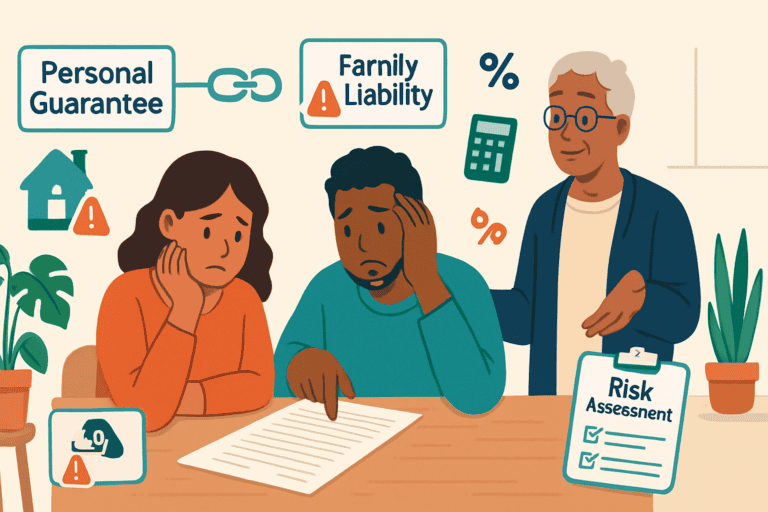
Many buyers team up with a partner, friend, or family member to get on the ladder. This can work, but the legal reality is brutal if things go wrong. On a joint mortgage, both borrowers are subject to joint and several liability. This means the lender can pursue either borrower for 100% of the outstanding debt — not half, not their “fair share,” all of it. If your co-borrower stops paying, that’s your problem, not the lender’s.
Equally important: that joint mortgage sits on both borrowers’ credit files and is included in full when either person applies for future borrowing. If you want to buy your own place in a few years, lenders will stress-test you against the entire joint mortgage balance, which can wipe out your borrowing capacity entirely.
Tenancy in Common, Declarations of Trust, and TOLATA
If you’re buying with anyone you’re not married to — and frankly, even if you are — you need a Declaration of Trust (also called a Deed of Trust). This document records each person’s beneficial interest, what happens if one party wants to sell, and whether unequal contributions are treated as loans or equity adjustments. Without one, the default legal presumption for joint owners is equal shares, regardless of who actually paid what.
You should almost certainly hold the property as tenants in common rather than joint tenants. Tenancy in common lets you own unequal shares and leave your share to whoever you choose in your will. Joint tenancy triggers automatic survivorship — when one owner dies, the other inherits regardless of any will, which is rarely appropriate for unmarried co-buyers.
Be aware of TOLATA 1996 (the Trusts of Land and Appointment of Trustees Act). Either co-owner can apply to court to force a sale of the property even if the other refuses. A well-drafted co-ownership agreement — ideally executed as a deed, which carries a 12-year limitation period rather than 6 years for a simple contract — should include a right of first refusal, a buy-sell mechanism with a clear valuation method, an exit timeline, rules on shared expenses, and thresholds for renovation decisions.
Tax Implications You Need to Plan For Now
Capital Gains Tax (CGT): If the property is your main residence throughout ownership, Private Residence Relief should exempt you from CGT on sale. But if you move out and keep it — say, to rent it — you’ll owe CGT on the gain attributable to the period it wasn’t your home, minus the final nine months of ownership. Co-owners who never lived in the property (a parent helping a child, for example) have no PRR entitlement on their share at all.
Inheritance Tax: If a parent contributes to the deposit but the property is held in their child’s name, HMRC may treat this as a potentially exempt transfer. If the parent dies within seven years, the gift falls back into their estate for IHT purposes.
What to Do Before You Start Viewing
- Get an Agreement in Principle (AIP) from a lender or broker before you fall in love with a property. This stress-tests your affordability in real terms.
- Budget for the full cost of buying — deposit, SDLT, legal fees (£1,000–£2,500), survey (£300–£700), and a contingency of at least £2,000 for unexpected costs.
- Check your credit report with all three agencies (Experian, Equifax, TransUnion) at least three months before applying. Dispute errors early.
- If buying jointly, instruct a solicitor to draft a Declaration of Trust executed as a deed before completion — not after, when leverage disappears and goodwill may have evaporated.
- If either co-buyer owns property, factor the SDLT surcharge into your budget from day one.
- Aim for the next LTV threshold down if you’re close. Even a few thousand pounds of extra deposit can save you tens of thousands over the mortgage term.
The deposit gets you through the door. Everything else — the rate you’re offered, the legal protections you put in place, the tax you’ll pay on exit — determines whether buying was genuinely the right move. Get the deposit question right by all means, but don’t stop there. The real financial risk lives in the details most people never bother to read.
Disclaimer: The information provided in this article is for informational purposes only and should not be considered financial or legal advice. Property and lending laws in the United Kingdom vary and may change over time. We always recommend consulting with a qualified solicitor and mortgage broker before entering into a property purchase or financial arrangement with another party.