A handshake between friends feels sufficient — until someone stops paying, wants out, or dies unexpectedly. The question of whether you can write your own legal contract and have it hold up in court has a deceptively simple answer: yes, you can. The harder truth is that most self-written contracts fail not because they lack legal standing, but because they omit the very provisions that matter most when things go wrong. And things do go wrong.
If you’re considering drafting your own agreement — whether it’s a personal loan between friends, a co-ownership arrangement for real estate, or a business partnership — you need to understand exactly what makes a contract enforceable, where DIY drafters consistently stumble, and which situations demand professional help regardless of your budget.
What Makes Any Contract Legally Binding
Courts don’t care whether your contract was drafted on a cocktail napkin or by a white-shoe law firm. They care whether it contains these elements:
- Offer and acceptance: One party proposes specific terms; the other accepts them without material modification.
- Consideration: Each side must give something of value — money, services, a promise to act or refrain from acting.
- Mutual assent: Both parties understood and voluntarily agreed to the terms. Coercion, fraud, or misrepresentation voids this.
- Legal capacity: Both parties must be adults of sound mind. Contracts with minors are generally voidable at the minor’s option.
- Legal purpose: The contract can’t involve illegal activity. An agreement to split profits from an unlicensed cannabis operation in a prohibition state is unenforceable on its face.
If your self-written contract checks every box, a court will enforce it. The problem is that “enforceable” and “useful when disaster strikes” are two very different standards.
The Statute of Frauds: When Oral and Informal Contracts Fail
Every state has some version of the Statute of Frauds, which requires certain categories of contracts to be in writing and signed to be enforceable. The categories that catch most people off guard:
- Any agreement involving the sale or transfer of real estate
- Contracts that cannot be performed within one year
- Agreements to pay someone else’s debt (guarantees and sureties)
- Contracts for the sale of goods worth $500 or more (under the Uniform Commercial Code)
If your agreement falls into one of these categories and it’s not in writing, it doesn’t matter how clear the terms were verbally. Most courts will refuse to enforce it. This alone is reason enough to put every significant agreement on paper.
Where DIY Contracts Consistently Fall Apart
The contracts that get thrown out or cause protracted litigation almost always share the same deficiencies. Here’s what self-drafters routinely miss:
Vague or missing default provisions. Your loan agreement says your friend will repay $10,000 over two years. Great. But what happens if they miss a payment? After how many missed payments can you accelerate the full balance? Is there a late fee? A grace period? Without these terms, you’re left arguing in court about what’s “reasonable” — and judges hate filling in blanks the parties should have addressed themselves.
No dispute resolution clause. Litigation is ruinously expensive. A well-drafted contract specifies whether disputes go to mediation, binding arbitration, or court — and in which county and state. Without this, jurisdictional fights alone can consume thousands of dollars before anyone addresses the substance of the disagreement.
Ignoring state-specific requirements. Interest rate caps (usury laws) vary dramatically by state. Texas caps consumer loans at 10% absent a specific statutory exemption. California’s constitutional usury limit is 10% for non-exempt lenders. Charge more than your state allows, and a court may void the interest entirely — or in some states, void the entire loan. If you’re writing a loan agreement, you must know your state’s usury ceiling.
No integration clause. This is the provision stating that the written contract represents the entire agreement and supersedes all prior discussions. Without it, the other party can introduce text messages, emails, and verbal promises as evidence that the “real” deal was different from what you wrote down.
Special Considerations for Real Estate and Co-Ownership
If your DIY contract involves shared ownership of property — the scenario where friends are most tempted to draft their own agreement — the stakes multiply exponentially.
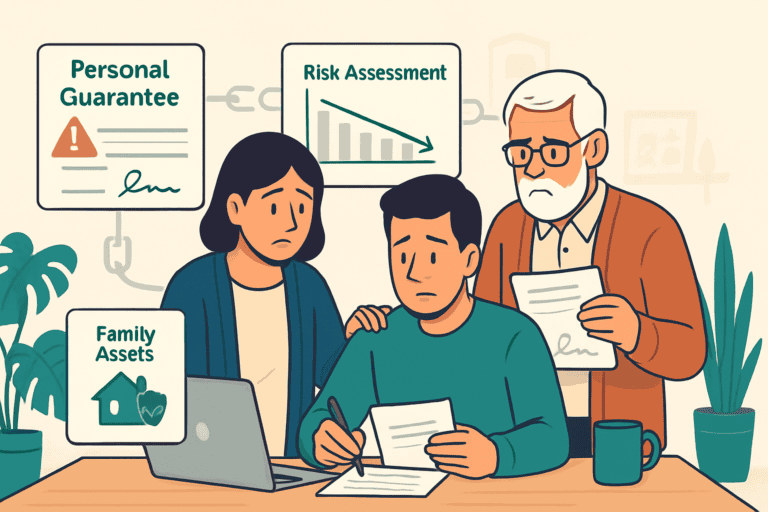
Joint and several liability means the lender can pursue either borrower for 100% of the mortgage debt. If your co-owner stops paying, the bank doesn’t care about your internal agreement. They’re coming after whoever has assets.
The DTI anchor effect is equally brutal: a co-signed mortgage counts fully against each borrower’s debt-to-income ratio on every future loan application, even if the co-owner makes every payment. Want to buy your own place in five years? That shared mortgage is still dragging down your numbers.
Tenants in common vs. joint tenancy is a critical choice most DIY drafters don’t even know they’re making. For non-married co-owners, tenants in common is almost always the right structure — it allows unequal ownership shares and lets each owner leave their share to whomever they choose. Joint tenancy forces equal shares and automatic survivorship, meaning if your co-owner dies, you own the whole property regardless of what their will says.
In community property states (Arizona, California, Idaho, Louisiana, Nevada, New Mexico, Texas, Washington, and Wisconsin), if your co-owner later marries, their spouse may acquire a legal interest in the property. Your co-ownership agreement should include protections against this — and honestly, this is where you need an attorney.
Tax Traps in Shared Agreements
IRS Form 1098, the mortgage interest statement, is issued under one Social Security number. If two friends co-own a property, only one of them gets the form. The other must attach a statement to their tax return claiming their share of the deduction. If you haven’t agreed in writing on how to split mortgage interest and property tax deductions — and documented who actually paid what — you’re setting yourselves up for a tax-season argument that can fracture the entire arrangement.
When You Absolutely Need a Lawyer
A self-written contract is perfectly adequate for straightforward, low-dollar agreements between people who trust each other and understand the terms. But you should hire an attorney when:
- Real property is involved
- The total value exceeds $10,000
- The agreement spans more than one year
- Multiple states’ laws could apply
- One party has significantly more leverage or sophistication than the other
Attorney fees for reviewing or drafting a simple contract typically run $300 to $1,500 — a fraction of what even a minor legal dispute costs to litigate.
Make Your DIY Contract as Strong as Possible
If you’re going to draft your own agreement, do it right. Use plain English — legalese you don’t fully understand will hurt you more than it helps. Include the full legal names and addresses of all parties, every material term, specific remedies for breach, a dispute resolution mechanism, a governing law clause specifying which state’s laws apply, and an integration clause. Both parties should sign and date the document, ideally in front of a notary. Keep originals. And revisit the agreement annually — circumstances change, and a contract that doesn’t evolve with them becomes a liability rather than a safeguard.
Disclaimer: The information provided in this article is for informational purposes only and should not be considered financial or legal advice. Laws and lending criteria vary significantly between states. We always recommend consulting with a qualified real estate attorney and financial advisor before entering into a property purchase or financial arrangement with another party.